The Shocked Faces
Whenever a new friend follows my personal Instagram account, I always know what's coming. They glance down at their screen, their eyes go wide, and they just freeze.
15.6k posts.
Before they can even ask, I have my answer ready: "I got on it really early—way before it was popular, back before anyone even thought of it as a social platform."
Right next to that massive number sits another one: 800 followers. That's simply because I never tried to build an audience, and most of those eight hundred people are just friends I've made along the way over the years.
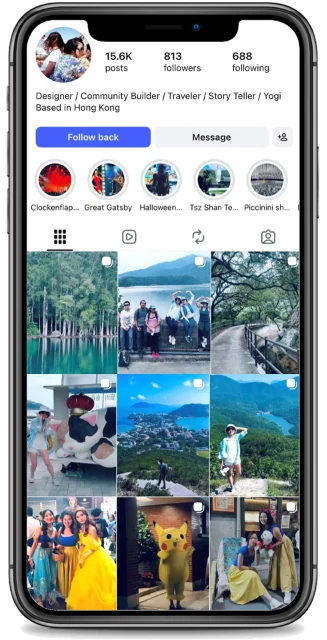
Looking at it from today's perspective, fifteen thousand posts looks slightly unhinged, like an obsession or the output of a full-time social media manager. But to me, it's just the quiet paper trail of an ordinary life, piling up years before anyone cared about algorithms or going viral.
Back when I first got online, the word "social" meant something completely different. It wasn't about the gaze of strangers. It was about the people closest to me: my family far away, and a handful of real friends.
Travel Diaries in PowerPoint
My online life didn't start with feeds and follower counts. Back in Taiwan, as I wrote in Nowhere Near the Ivy League, getting online meant listening to the screech and static of a dial-up modem. There was no social media. Online life happened on text-only BBS bulletin boards—essentially Taiwan's early version of Reddit—in chat rooms, on ICQ, and later on MSN Messenger. It was an era built entirely on plain text.
The urge to share really kicked in when I moved to Denver for graduate school. It was my first time living abroad, and every day threw something brand new at me. I wanted my friends and family back home to see what I was seeing, but chatting apps back then couldn't handle much more than text. So I turned my travel diaries into PowerPoint decks. I dropped photos onto slides, typed out my stories right next to them, and emailed the presentations home one by one. It was basically my own personal newsletter. For everything else, we just chatted on MSN Messenger.
Later on, I moved to New York, right around the time Facebook was born. Invites kept trickling into my inbox, one after another. At first, I assumed they were all spam and ignored them. But since they were coming from people around me, and more and more of my friends were joining, curiosity finally won. I signed up, and found myself riding the very first wave of social media without even trying. My friends list grew, but it was made up entirely of people I knew in the US. There wasn't a single person from Taiwan on there, because the trend hadn't crossed the Pacific yet.
Once people back home finally caught on, Facebook became a genuine lifeline for someone living on the other side of the world. All I had to do was post an update, and everyone knew how I was doing. Without it, I suspect I would have lost touch with a lot of the people in my life.
Maybe that's why the word "social" has always stayed anchored in my mind as an inner circle: a living room for real friends, not a stage in front of strangers.
In Search of a Polaroid Filter on an iPhone 3
Later, I moved to Hong Kong and started writing a blog (a real blog this time, not PowerPoint files clogging my friends' inboxes). Instagram arrived right around then, and at first, it wasn't "social" at all.
I had an iPhone 3 back then. Smartphones couldn't do nearly as much, and built-in photo editing didn't exist yet. I wanted my photos to have that warm, vintage Polaroid look before I put them on my blog or shared them in a Facebook post. I experimented with a few photography apps and eventually landed on Instagram, simply because it was straightforward and had great filters.
To me, it was just a photo filter tool. It certainly wasn't a social platform.
Back then, an Instagram post could only hold a single photo. If I wanted to share several shots from an afternoon, I had to publish them as several separate posts. Posting one photo at a time is the real reason my post count ballooned into the thousands. Without my planning it, the app turned into an open photo album for keeping in touch with friends, even though I never actually liked using it for photo storage—you couldn't group an event's photos into proper albums.
Years slipped by, and while I wasn't paying attention, Instagram quietly turned into what everyone now calls social media. The first time a new friend asked me for my IG, I froze for a second. So people don't add each other on Facebook anymore? They ask for IG? I wondered if the younger generation just thought Instagram was cooler. I've also noticed that younger people use Instagram as their primary messaging app instead of WhatsApp—which actually feels a lot like how we used Facebook and Facebook Messenger back in the day.
A Hundred Stories and a Message from Mom
When Stories first appeared, I took the name completely literally. If it's called a story, shouldn't it tell a story? So I laid out my photos in chronological order, narrating what happened step by step so people could follow along. Whenever I saw someone post just a random meme or a single detached picture, it struck me as so odd. How on earth is a meme a "story"?
Every so often, my OCD would kick in, and I'd post a hundred Stories in a single stretch. Leaving a story unfinished just makes me uncomfortable.
Naturally, I noticed that almost nobody tapped all the way to the end. Fair enough: it was information overload, and people's thumbs probably got tired. I noticed the drop-off, but I never changed a thing. I wasn't running an influencer account; this was just my online album for friends and family. In my stubborn mind, anyone who truly cared about me would tap through to the end. (Though looking back, that was probably wishful thinking.)
There was another reason I loved posting all those Stories: saving them into Highlights finally satisfied my urge to organize my photos into albums.
Those posts had one more essential job: they let my family and friends know what I was up to, sparing me the friction of phone calls and small talk. Whenever I traveled abroad, posting photos on Facebook every day—and later, stringing together Instagram Stories—was my proof of life. It was my signal that I hadn't been kidnapped, hadn't had an accident, and was having the time of my life.
I remember one trip to Iceland when our schedule ran late. Before I even had the chance to post that evening's photos on Facebook, my mom had already messaged me, worried that something had happened to me.
Those posts and Stories were never "content." They were how I told my family I was safe.
A Feed Full of Strangers
Eventually, the whole premise of social media shifted. It stopped being an intimate circle for keeping up with friends and became a stage for chasing strangers' attention and engineering virality.
At first, posts and videos from strangers started showing up in my Facebook feed. I didn't really mind. It was an easy way to stumble across interesting articles and fun stories. Not bad at all.
Then that shift came for Instagram. One day, my friend Cherry complained to me that her feed was suddenly packed with posts from strangers, and she couldn't see her friends' lives anymore. She couldn't understand what had happened to the place.
At first, I found it annoying too. But eventually, I adapted, just like I had with Facebook. These days, I watch strangers' videos on Instagram too, whether for entertainment or to pick up interesting tips.
Still, I've noticed how differently the younger generation uses the app. They rarely post to their grid anymore; they almost exclusively post Stories. I often wonder why. Is it because a Story disappears after twenty-four hours, leaving no permanent footprint, so it feels more private?
For me, Instagram and Facebook have always been photo albums where I keep my memories, shared with the people I know. So why would I need to keep it private?
My Own Stubbornness
People often see me as trendy, someone who's always early to the next wave, because I embraced social media long before most. Some of my friends back in Taiwan still don't touch Instagram, or haven't even bothered downloading WhatsApp.
From PowerPoint decks in Denver and the first wave of Facebook in New York, to fiddling with Polaroid filters on an iPhone 3, I was right there on the front lines.
But I know I have my own stubborn streak. Getting the attention of strangers was never my goal. I never thought about pleasing an algorithm, and I never wanted to perform for strangers.
I only wanted my friends far away to see the view in front of me, and my mom to know, every day, that I was safe.
All these years later, that account is still what it was when I first found it: a quiet living room kept for family and friends, and a photo album left open on the coffee table.
15.6k posts, 800 followers.
一萬五千則貼文,八百個追蹤者
當「社群」兩個字,還只屬於身邊的人
震驚的表情
每當新朋友追蹤我的私人 Instagram 帳號,臉上總會浮現同一個表情。他們盯著螢幕,眼睛睜得好大,滿臉難以置信。
一萬五千多則貼文。
我早就知道他們會出現那個震撼的表情,而我也早就準備好答案回覆他們:「因為我很早就開始用了,早在它流行之前、早在它變成社群媒體之前,我就在用了。」
在那個貼文數字旁邊,只有八百個追蹤者,因為我從沒想過要增加追蹤者人數,而那八百多個人,多半是我一路結交來的朋友。
在今天看來,一萬五千多則貼文像是某種強迫症,或是一份全職的社群行銷工作。但對我來說,那只是生活一點一滴的安靜累積,且那是在大家談論演算法和爆紅之前就開始了。
那時的「社群」,在我腦海裡完全是另一個意思。它指的不是陌生人的目光,而是我身邊最親近的人:遠方的家人,和幾個最要好的朋友。
用簡報寫的旅行日記
我的網路生活不是從貼文牆開始的。以前在台灣,就像我在〈離常春藤很遠很遠〉寫過的,上網伴隨著數據機刺耳的連線聲。那時沒有社群媒體,大家在網路上交流,靠的是 BBS、線上聊天室、ICQ,或是後來風靡一時的 MSN Messenger,基本上是一個完全以純文字為主的時代。
我在網路上分享生活,是從我到美國念書的時候開始的。當時我到丹佛念研究所,第一次在國外生活,每天都有好多新體驗。我想讓家鄉的朋友看見我眼前的世界,但當時的通訊軟體大多只能傳文字,於是我用 PowerPoint 寫旅行日記,在投影片裡放照片、寫故事,把簡報一封封寄給家人朋友,讓他們跟著我冒險。像是我個人發送的電子報一樣。至於平時聯絡,靠的就是 MSN Messenger。
後來我搬到紐約,正好遇上臉書誕生。那時邀請信一封接一封寄到我的信箱,我一開始以為那是垃圾郵件,根本沒理會。但因為寄件人都是身邊的人,而且越來越多人加入,最後我忍不住好奇,點進去註冊了帳號,就這樣莫名踩上了第一波社交媒體浪潮。臉書上的朋友名單慢慢增加,但全都是在美國認識的同學與朋友,上面一個台灣的朋友也沒有,因為那時臉書的風潮根本還沒吹到台灣。
直到台灣也跟上潮流,臉書的世界對我這個離鄉背井的人來說,才真正變得好用。我只要隨手在臉書上發篇貼文,大家就能掌握我的消息。社群媒體成了我跟家鄉保持聯繫最重要的工具,如果沒有它,我想我大概早就跟許多人失聯了。
也許這就是為什麼,「社群」這兩個字在我的腦袋裡,一直都是「圈內好友」的分享平台。那是留給真實朋友的客廳,不是面對陌生人的舞台。
在 iPhone 3 上尋找拍立得濾鏡
後來我搬到香港,也開始寫部落格(真正的部落格,不是灌爆朋友信箱的 PowerPoint 檔案)。Instagram 就是在這段時間出現的,而它一開始一點也不「社群」。
那時我用 iPhone 3,手機功能沒那麼多,也沒有內建濾鏡。我想讓照片有拍立得的感覺,好貼到部落格或臉書貼文裡。試了幾款軟體後,我選了 Instagram,因為它容易上手,濾鏡選擇也多。
對當時的我來說,它只是一個相片濾鏡軟體,根本不是什麼社群平台。
那時 Instagram 一則貼文只能放一張照片。如果想分享好幾張,就只能連發好幾則貼文。一張一張發下來,正是我累積了這麼多貼文的一大原因。不知不覺中,它變成了一本和朋友分享近況的生活相簿。雖然我其實不太喜歡用它存照片,因為它沒辦法把同一個活動的照片整理歸檔在同一個相簿裡。
好幾年過去,在我沒留意的時候,Instagram 突然變成了大家口中的社群媒體。第一次有新朋友開口問我的 IG,我還愣了一下。原來大家現在不加臉書,改問 IG 了?是因為年輕世代覺得 IG 比較酷嗎?另外,我發現年輕世代也把 IG 當成通訊軟體,而不一定用 WhatsApp。這好像又跟我們當時用 Facebook 加上 Facebook Messenger 一樣。
一百則限時動態,與一則我媽的訊息
在英文裡,限時動態的名字叫做「Story」(故事)。
這個功能剛出現時,我完全是照著英文字面去理解它的:既然叫「故事」,那不就應該好好講個故事嗎?所以我的做法,是把照片照著事情發生的先後順序排好,向大家交代我的經歷。看到有人只發一張隨便的梗圖,或是單單一張照片,我都覺得十分奇怪,一張梗圖到底算什麼故事?
有時我強迫症發作,一口氣連發一百則限時動態。因為我沒把故事講完會不舒服。
我很快就發現,沒幾個人真的會點到最後。這很正常,資訊量實在太大了,大家點螢幕大概也點到手酸了吧。我注意到了這點,卻什麼也沒改。畢竟我不是在經營什麼網紅帳號,這只是我的網路相簿,是給我自己,還有發給親朋好友看的。我固執地覺得,真正在乎我的人,自然會把它點開看完(也許這只是我的一廂情願)。
另外一個狂發限時動態的原因是,這讓我可以把限時動態歸檔到「精選動態」,滿足我想要把照片歸檔的願望。
我那些貼文,還有另一個作用,就是讓家人朋友知道我在做什麼,省去了我特地打電話寒暄的力氣。如果我出國旅行,我會每天在臉書上發照片貼文,或是後來在 Instagram 上發限時動態。那是我報平安的訊號,讓他們知道我沒被綁架、沒遭意外、玩得正開心呢。
記得有一次,我在冰島旅行,某天的行程玩得比較晚,所以我還沒來得及在臉書上發文,我媽已經傳訊息來,以為我出了什麼事。
所以,那些貼文跟限時動態,是我給家人報平安的工具。
動態牆上的陌生人
後來,社群媒體的意義變了。它不再是維繫好友的空間,而是試圖引起陌生人的注意、追求爆紅的舞台。一開始,我的臉書上開始出現陌生人的文章、影片。當時我倒是不覺得這不好。畢竟我可以藉此讀到一些有趣的事件,好玩的文章。也不錯啊。
但後來,這件事情延伸到 Instagram 去了。有一天,朋友 Cherry 跟我抱怨。她說她的 Instagram 裡頭滿是陌生人的貼文,反而看不到朋友的生活。她無法理解這個平台到底怎麼了。
一開始我也覺得煩。但後來我也接受了。就像臉書的變化一樣。我開始在 Instagram 上看陌生人的影片,找娛樂,或是找有趣資訊。
對了。我發現,年輕世代幾乎不發貼文,只發限時動態。是因為限時動態二十四小時就會消失、不留下個人痕跡,感覺比較有隱私嗎?
對我來說,Instagram 和臉書一直是我保留回憶的相簿,是我跟家人朋友之間的分享空間。那為什麼還要管什麼隱私呢?
自己的固執
大家總覺得我走在潮流尖端,總能趕上最新趨勢,因為我早早就擁抱了社群媒體,而我有些台灣的朋友,至今依然不用 Instagram,甚至連 WhatsApp 都沒下載。
從丹佛的簡報、紐約的第一波臉書,到拿著 iPhone 3 摸索 Instagram 的濾鏡,我一直都在最前面。
但我知道,我也有自己的固執。對我來說,得到陌生人的注意從來就不是我的目標,我從沒想過去迎合演算法,更沒想過在陌生人面前表演。
我只是想讓遠方的朋友看見我眼前的風景,讓我媽每天能放心地知道,我平平安安。
走到今天,那個帳號依然是我最初認識它的樣子:一個只留給親友的客廳,一本攤在桌上的生活相簿。
一萬五千多則貼文,八百個追蹤者。