The Child Who Asked Why
Growing up in Taiwan before Google, I was always the kid who asked why. Maybe it was pure curiosity, maybe I was just never satisfied with a simple answer, or maybe it was a streak of rebellion in my bones. I hated being told what to do without an explanation, and I refused to do anything until I understood why I should do it in the first place. Unfortunately, growing up with traditional Asian parents and a military-style school system where you were expected to obey orders without question, all those "whys" had nowhere to go. They just echoed endlessly inside my head.
Then Google arrived. Then smartphones arrived. Finally, my curiosity had an instant outlet. Any tiny question that popped into my head could be looked up on the spot. I researched so many obscure, random things that my friends still laugh about how much useless (or, every now and then, surprisingly useful) trivia I carry around.
Sparring Partners and the Rebel Kid
Now, I have AI to ask about all the things that used to be nearly impossible to track down. As I wrote in Her Name Was Clara, I gradually turned into the very person I once rolled my eyes at: someone who consults AI about every little detail in daily life. But I never treat it as an oracle, and certainly not as a summary machine. It is my sparring partner. I treat it as someone to push against, constantly asking it why.
That distinction really clicked for me this week when I read a Facebook post by Kevin Liu, a Taiwanese author and trainer who writes about thinking and workplace productivity. He pointed out that while AI has closed the old information gap, it has opened up an entirely new cognitive gap: between people who take the answer and stop, and people who keep asking why, questioning premises, and hunting for other possibilities. As he put it (translated from his Chinese): "A good conversation is not just an exchange of information, but something that loosens what you originally thought."
That hit home.
Recently, I gave a lecture to my design students on how to use AI. I deliberately avoided giving them ready-made prompts—the kind people copy and paste across Facebook and Threads. Instead, I focused on how to think, how to ask questions, and how to critique their own assumptions. I walked them through how I use AI as a sparring partner: drafting a prompt, expanding on it, batting questions back and forth to brainstorm. I wanted them to learn how to dig deeper and deeper, rather than settling for the first response they get or accepting a brief just because someone handed it to them. One of my slides put it bluntly: "Be the Rebel Kid that keeps challenging your parents (or society)."
To me, the thinking process is the journey, not the finish line. If I just hand you a prompt that skips straight to the result, where is the fun in that?
Hallucinated Numbers and the New Gap
There is another very practical reason to keep asking why: AI fabricates things with complete confidence.
When writing scripts for Instagram reels, I often use Gemini (which originally won me over in Then What's the Point of AI?). I asked it to always include the post count for each hashtag so I could verify them. But when I actually typed the tags into Instagram, I noticed several counts were shockingly low. For example, #HKSpeakeasy had barely five hundred posts, yet Gemini had served up an inflated, fictional figure.
When I confronted it, Gemini admitted it was "hallucinating and fabricating those numbers" because it has no real-time access to Instagram data. Months of scriptwriting had quietly relied on invented metrics. Earlier on, when I asked it for fact-checking links, every single URL it generated was broken—completely made up. Its excuse was that its model is designed to complete the task at all costs, so it defaults to inventing an answer rather than admitting its limitations.
This is Kevin Liu's new gap made concrete: the people who take the answer, and the people who check it. If I had simply trusted Gemini, I would have kept using low-traffic hashtags without ever understanding why my views were tanking. Another article I read this week argued that AI will widen the knowledge gap in two ways. Part of it is pure capitalism: those who can afford premium monthly subscriptions get more reliable sources, better analysis, and superior outputs. But the other part is cognitive: people who cannot tell right from wrong, who never think to challenge AI, simply swallow whatever it tells them and stop thinking altogether.
Hair, Texture, and a Blurry JPEG
Which brings me right back to the summary. On this blog, I have touched on summaries before—whether it was my yoga school roommate having AI summarize articles rather than watch a full video class in The Longer You Stay in the Dark, or a friend joking that he would just have ChatGPT summarize my posts in Week 2: English Novels, a Brick Wall, and Almost Getting Summarized.
For me, whether it is a book, a movie, the novel I am writing, or this blog, I never read summaries. Knowing the basic shape and the ending of a story is not the same as experiencing it. I want the hair. I want the texture. I want to be moved by a sentence in that quiet, specific way that only a human being can feel when reading the real thing. You will never get that emotional touch from a summary.
In his essay "ChatGPT Is a Blurry JPEG of the Web" for The New Yorker, the sci-fi author Ted Chiang compared generative AI to a lossy JPEG: a compressed file format that preserves the rough outlines while losing all the fine grain. A summary does the exact same thing. It keeps the silhouette, but throws away all the delicate grain and texture that make you feel something.
Two Speeds and the Joy of the Wait
People absorb the world at different speeds. My brother likes to fast-forward through YouTube videos, podcasts, and movies. My take is that his mind is simply busier and processes information faster than mine, so he picks a pace that works for him. I also know people who flip straight to the final chapter of a novel the moment they open it, or who refuse to watch a TV show week by week because they would rather binge the whole season at once.
I am the complete opposite: I love the wait. I love the slow build-up of anticipation. After watching a new episode of a show, I savor having a whole week to chew over a single scene or a line of dialogue, search for articles, discuss it with friends, and look forward to what comes next. The fun is in the process, not just getting the outcome.
As Kevin Liu wrote: "Information can be acquired quickly, but thinking takes time to happen. Reading is not just the result of obtaining information; more importantly, it is the process of training thought." Moving slowly gives you room to think. That does not make fast people lesser; my brother is still engaging with the material, just at a different speed.
Trips and Sparks That Start with No Destination
For me, whether it is thinking, creative work, or travel, the journey itself is always the heart of it. And that journey usually begins with the tiniest spark.
One night, while passing time scrolling through memes on 9gag, I came across a photo of a landscape with a caption saying it reminded the poster of the alien planet in Interstellar. My curiosity caught fire on the spot, and I had to put it out right away and find out where it was, or I wouldn't be able to sleep. It didn't take long: it was Mount Bromo, on the island of Java, Indonesia.

From that unexpected spark, I planned an entire trip across Java and Bali. Planning a whole itinerary from a random 9gag meme sounds ridiculous, but I loved every minute of it—the surprise of how it started, the logistics, sorting out the messy details, and finally stepping out onto that dirt path with my own feet.

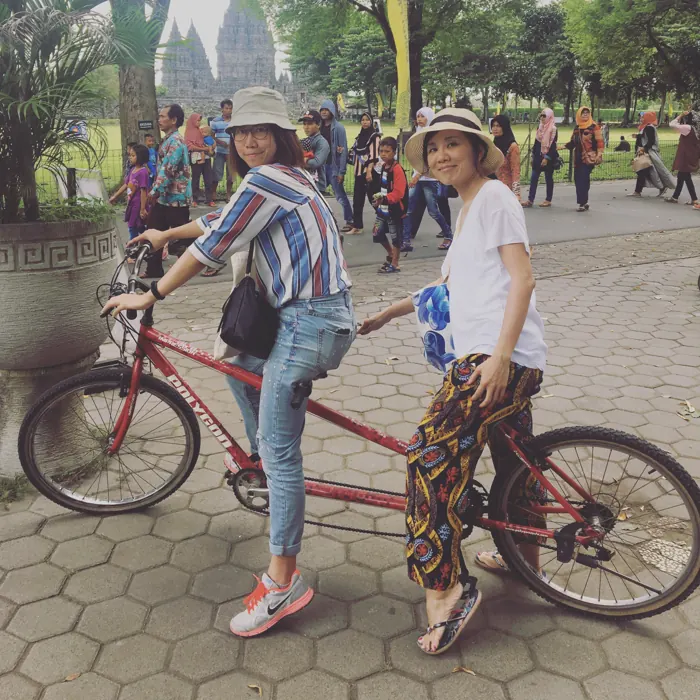

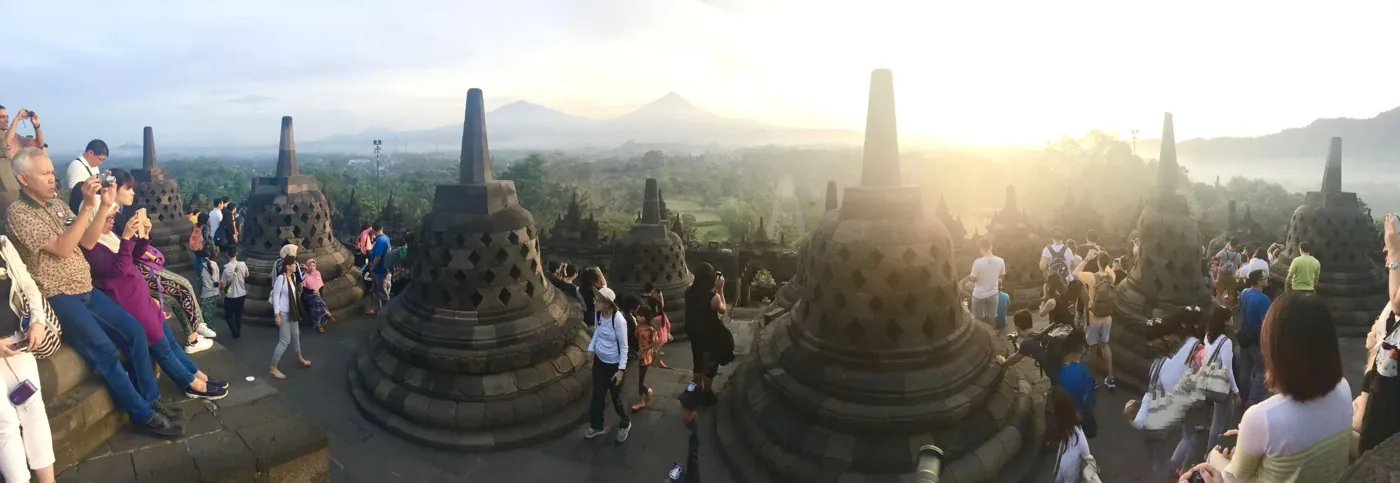
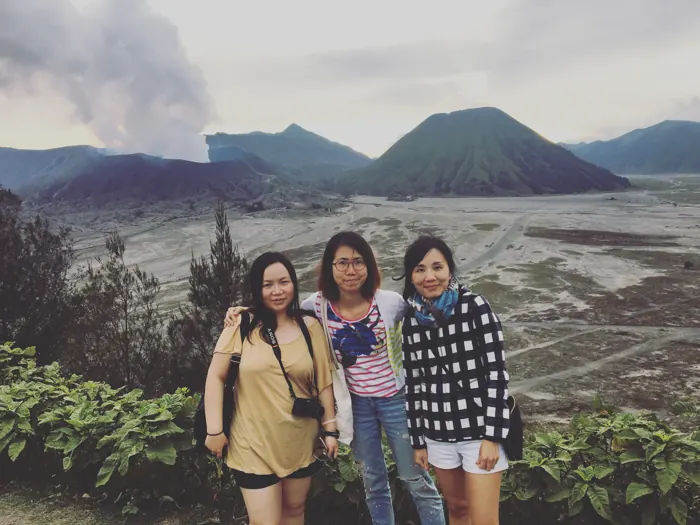
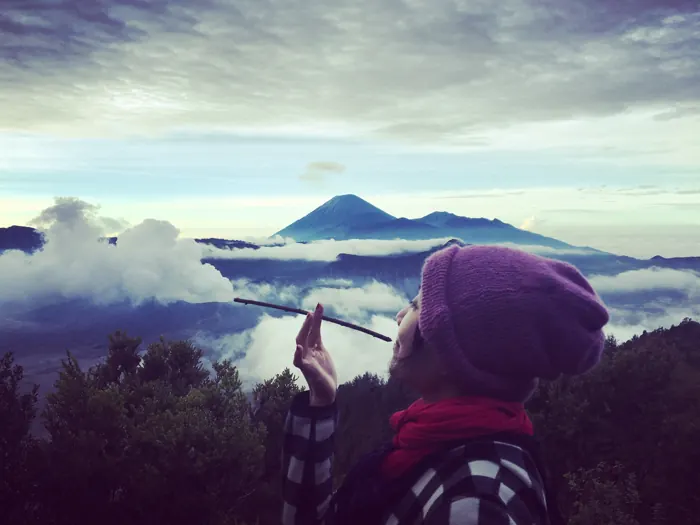
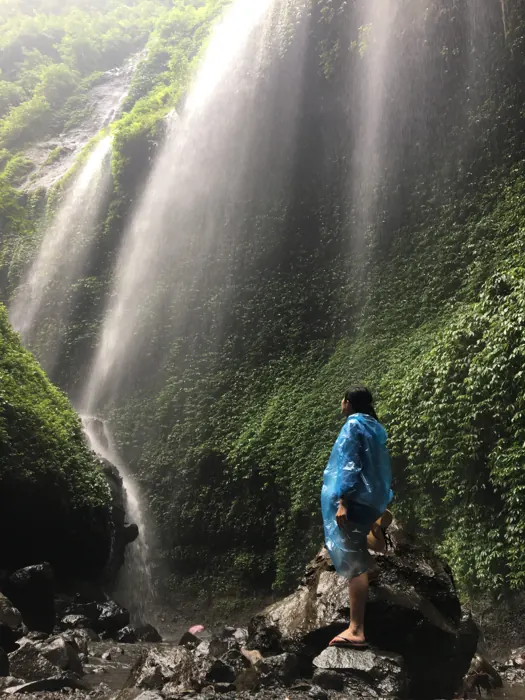

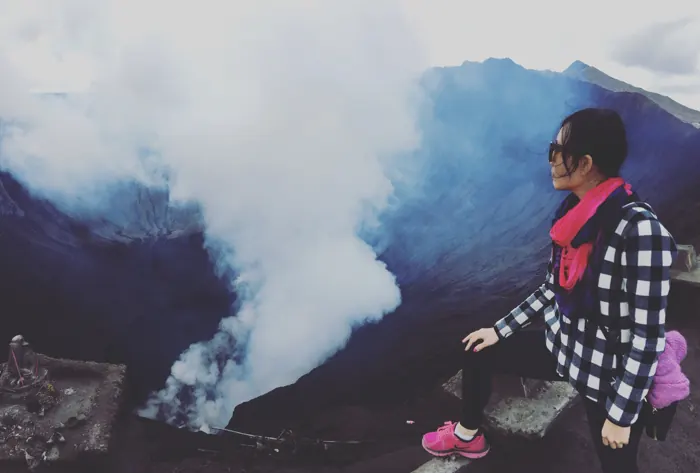


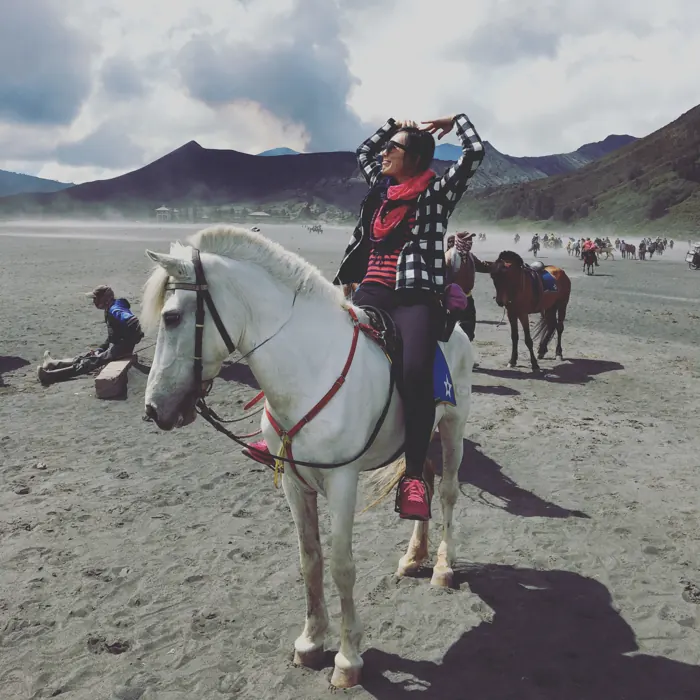


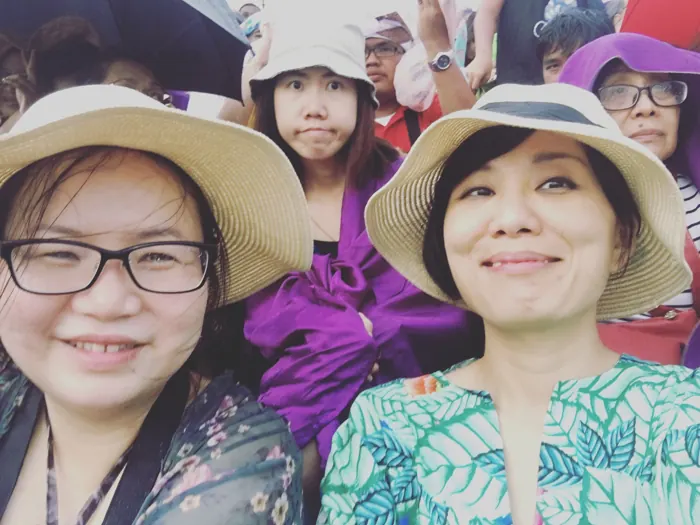


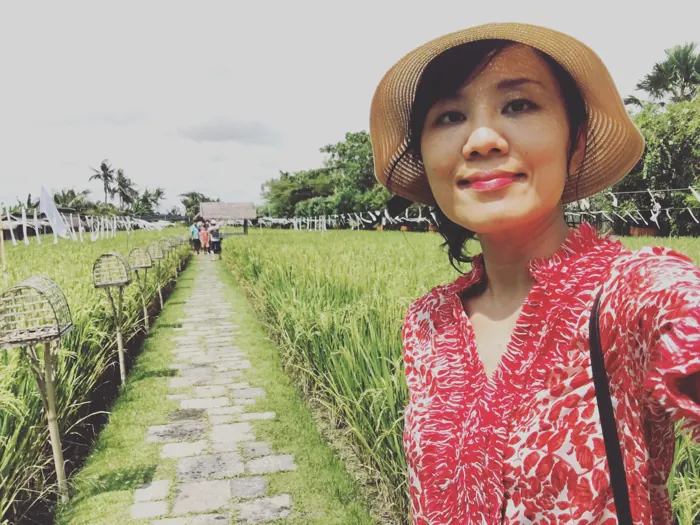
Some people say detailed planning ruins the surprise. For me, the research is part of the trip. But even with all my preparation, I never watch those YouTube walkthrough videos that show you every step of the route. That really would ruin the surprise.
Besides travel, most of my projects and writing start this way too. This blog is one of them. It started with a Halloween costume: I wanted an app to test outfits, and that spark became this blog, then a website for my Instagram, and now five series here, with maybe more to come. (That story is in Vibe Coding.) A sudden spark catches fire, and I dive right in without having the faintest idea what the final destination looks like. When you don't even know where you are heading or what the finished product will be, there is simply no way to jump straight to the result. But finding my way through the unknown—piecing the whole picture together step by step—is where all the fun is.
If someone handed me a ready-made answer or a summary halfway through, how boring would that be!
That is why AI summaries leave me cold. They operate on the assumption that only the destination has any value, eager to shove a conclusion in your face while stripping away the exploration, the unexpected detours, and the texture that made the thing worth doing in the first place. You can get facts from a summary, but it will never light a spark in you, and it will never move you.
The destination was never the destination.
The entire journey is.
目的地從來不是目的地
Google 出現前的叛逆小孩、捏造的標籤數字、等上一週的劇,以及從 9gag 開始的旅行
愛問為什麼的小孩
我從小就是愛問為什麼的小孩。也許是好奇,也許是從來不滿足於一個答案,也許是骨子裡的叛逆基因,我不喜歡別人命令我去做什麼,非要知道背後的原因才肯做。只可惜,我從小在台灣長大,而在傳統的亞洲家庭與軍事化教育裡,大人總要求服從命令、不需要多作解釋,所以我那些「為什麼」只能在我的腦袋裡迴盪。
後來,Google 出現了。後來,智慧手機出現了。終於,我的好奇心之癮可以隨時被滿足。任何冒進腦海裡的小疑問,我都能立刻動手去查。我查了太多稀奇古怪的事物,以至於身邊的朋友常常覺得好笑,納悶我怎麼會知道那麼多冷知識。
陪練對象與叛逆小孩
現在有了 AI,我開始用它來問各種以前很難查到答案的事。正如我在〈她的名字叫 Clara〉裡寫過的,我不知不覺成了生活大小事都要問 AI 的那種人。但我從來不把它當成給答案的神諭,也不把它當作摘要機器。它是我的陪練對象,我總是對著它不斷追問為什麼。
這週讀到劉奕酉(他是一位在台灣專注於思維與工作方法的作家、培訓師)在 Facebook 上寫的一篇貼文。文章中提到,AI 弭平了過去的資訊落差,卻開啟了一道全新的認知鴻溝:一邊是拿到答案就停下的人,另一邊是持續追問為什麼、追問前提與其他可能性的人。他在貼文裡寫道:「一場好的對話,更不只是交換資訊,而是讓你原本的想法產生了鬆動。」
我看了很有感。
前陣子我為設計課的學生上了一堂怎麼使用 AI 的課。我不是直接給他們答案,給他們那種大家在 Facebook 或 Threads 上貼來貼去、複製就能用的現成 prompt。我先教他們怎麼思考、怎麼提問、怎麼批判自己的想法。之後,我示範了我如何把 AI 當成陪練對象,怎麼去寫 prompt、衍伸 prompt,讓我跟 AI 可以一來一往地提問,幫助我腦力激盪。我希望他們學會一層一層追問到底,不要滿足於第一個答案,也不要只因為有人叫他們做什麼就照單全收。我的簡報裡有一張寫得很直接:「Be the Rebel Kid that keeps challenging your parents (or society)」,做那個不斷挑戰父母(或社會)的叛逆孩子。
因為對我來說,思考的過程本身就是旅程,而不是終點。如果我直接給你 prompt,讓你直接跳到結果,那就不好玩了!
捏造的數字與新的鴻溝
追問為什麼,在 AI 時代還有另一個極現實的理由:AI 會臉不紅氣不喘地編造事實。為了寫 Instagram 短影音的腳本,我常使用 Gemini(當初在〈那要 AI 幹嘛?〉裡徹底說服我的工具),並要求它附上 hashtag 的貼文數量,方便我查證。結果當我把 hashtag 輸入 Instagram 時,卻發現許多標籤的實際數量少得可憐,例如 #HKSpeakeasy 實際上只有五百多則,Gemini 卻給出了一個虛構的高數字。
當我去質問它時,Gemini 坦白承認自己「產生幻覺,然後捏造了數字」,因為它根本無法看 Instagram 的即時數據。更早之前,我也曾要求它提供資料來源的連結,結果點進去發現每一個連結都無法開啟,全是憑空編造的假網址。它的解釋是:它被設計成要把任務完成,而它有時會偷懶,或是寧可編造答案,也不會坦承自己做不到某些任務。
這正是劉奕酉所說的新鴻溝最真實的體現:直接接受答案的人,與動手查證的人。如果我今天完全相信 Gemini 說的,可能一直用了低流量的 hashtag,然後都不知道我的 Instagram 貼文流量降低的原因。
這週我讀到另一篇文章也提到,AI 時代會讓知識鴻溝變得更大。一部分原因是資本主義的影響,負擔得起高額月費的人可以使用更好的 AI,得到更穩定可靠的知識來源,以及產出更好的分析結果或產品;但另一部分在於認知:有些人根本無法判斷是非對錯,不知道自己應該去質疑 AI,只是一味相信 AI 告訴他們的一切,然後停止思考。
毛髮、質地與模糊的 JPEG
這就又繞回了摘要這件事。在先前的文章裡,無論是〈在黑暗裡待得越久〉裡室友叫 AI 整理重點,不想看完一整支瑜伽教學影片,還是〈第二週:英文小說、一面牆、懶人包〉裡朋友開玩笑說要叫 ChatGPT 把我的文章做成懶人包,我都聊過摘要這回事。
對我來說,無論是一本書、一部電影、我自己正在寫的小說,還是這個部落格,我從來不看摘要。只知道故事的輪廓和結局,根本不等於讀過這個故事。我要的是毛髮,我要的是質地,我要的是在讀到某個句子時,被深深觸動的那種只有人類才能體會的感覺。這一切情感上的觸動,你在摘要裡永遠不可能得到。
美國科幻小說家 Ted Chiang 在《The New Yorker》的一篇隨筆《ChatGPT Is a Blurry JPEG of the Web》中,把生成式 AI 比喻成一張模糊的 JPEG:它是一種因為壓縮而失去精細度的格式,看似保留了粗略的輪廓,卻丟失了所有細膩的紋理。摘要也是一樣,留下輪廓,丟掉了能讓人動容的紋理。
兩種速度與等待的樂趣
我哥看 YouTube 影片、聽 Podcast、看電影都喜歡快轉。我的理解是他的腦袋思緒很忙,吸收資訊的速度比我快,所以他選擇了適合自己的節奏。也有人故事才剛開始就想知道結局,或不想每週等一集,寧願整季一次追完。
我恰恰相反,我很享受等待。我喜歡那種期待感慢慢累積的過程。每週看完新的一集電視影集,我有一整週的時間可以去細細回味、反芻其中的一個場景、一句台詞,上網找相關的文章來讀,或是和朋友熱烈討論,然後期待新一集的到來。好玩的是過程,而不是拿到結果的那一瞬間。
劉奕酉在貼文裡寫道:「資訊可以被快速取得,思考卻需要時間發生。閱讀,不只是取得資訊的結果,更重要的是訓練思考的過程。」是啊,慢慢走,比較有更多時間可以思考,不是嗎?不過,我並不是說走得快是不好的。我知道我哥還是有在看,只是速度不同。
從 9gag 開始的旅行
對我來說,無論是思考、創作還是旅行,旅程本身才是核心,而且這段旅程往往從一個微小的火花就開始了。
有一晚,我正無聊地滑著 9gag 上的迷因打發時間,突然看到一張風景照片,上面的說明寫著這個地方讓他想起了電影《星際效應》(Interstellar)裡的外星場景。我的好奇心瞬間燃起,我當下非得滅火,搞清楚那到底在哪裡才行。不然我會睡不著。很快的,我查到了。那是印尼爪哇島的布羅莫火山(Mount Bromo)。
從那個意想不到的火花開始,我規劃了一整趟橫跨爪哇島與峇里島的旅行。從一個 9gag 迷因圖片規劃出整趟旅行,聽起來很好笑,但我好享受這個過程,享受它來得那麼意外,也享受最後成行的滿足。
有些人說,他們不想要做詳細計畫,因為這會破壞驚喜。我想,我喜歡在出發前做足功課,一個是因為對我來說,這些準備工作本身就是旅程的一部分。我極度享受規劃旅行的過程:弄清楚交通邏輯、把複雜的細節串聯起來、排出一整套行程。然後出發,親眼去看,自己走那條路,享受途中發生的一切驚喜。而且即使我做很多準備,我絕對不看那些把整條路線走一遍給你看的 YouTube 導覽影片,因為那才是真正徹底毀了驚喜。
其實不只是旅行,很多時候我手頭上的專案、我的寫作,也都是這樣開始的。這個部落格就是其中之一。它的起點是一套萬聖節服裝:我想做一個試穿搭的程式,結果那個火花變成了這個部落格、我的 IG 網站,還有現在部落格裡的五個系列,未來說不定還會更多。(這段故事寫在〈用聊天的方式寫程式〉。)而這些突如其來的靈感火花,我根本不知道終點會是什麼,就一頭栽了進去。既然連自己要去哪裡、終點長什麼樣都不知道,根本就沒有「直接跳到結果」這件事。但在未知的摸索中,在一步步拼湊出全貌的過程裡,我卻玩得無比開心。
如果這時候有人跑來塞給我一份現成的答案或摘要,那多無聊啊!
這也是為什麼,AI 給的摘要始終打動不了我。它預設了每件事都只有「結果」值得被留下,急著把答案丟到你眼前,卻把過程裡的摸索、意外的驚喜、動人的質地,全當成多餘的成本給剝奪了。你可以從摘要裡拿到資訊,但你永遠不可能從中被點燃火花,更不可能被它深深打動。
目的地從來不是目的地。
整趟旅程才是。